Sunday, July 25, 2021

A Good Day for Cancer?!

That spring day in 2007, when I first heard the word “carcinoma,”was memorable. Not just because of the diagnosis, but because of what happened after my appointment at Johns Hopkins. As I drove through Baltimore on my way home to Leesburg, Virginia, I came upon a horrible car accident. As the police directed me around the crash, paramedics were placing a sheet over the driver’s side of a mangled car. Someone was not going home.

“Holy crap!” I thought, “That could me. At least with cancer I still have a chance.”

Then I remembered reading something that my running guru, Dr. George Sheehan, wrote about his cancer diagnosis. He was diagnosed with inoperable prostate cancer. His son, an endocrinologist, tried to reassure him, “People with prostate cancer usually die of something else.”

What his son said makes sense. Older people have other risks – heart disease from smoking, weakened blood vessels from untreated high blood pressure, diabetes from obesity. Many people die from heart attacks, strokes, and complications from diabetes.

But George decided right then and there: “I might die of prostate cancer, but I was certainly not going to die of anything else.” *

Likewise, I told myself, “I might die of breast cancer, but I certainly wasn’t going to die of anything else. What I can control, I will control.”

I chose the Sheehan approach. I kept running, had surgery, and worked with my medical team to help my body maintain an optimal state of health. Cancer was going to have to look elsewhere for help. I went about making myself the best body possible.

Was this a cure? No way. The idea of a cure leads many people to assume they are immortal, that they will live forever. Most people assume this. That’s why they smoke, don’t wear seat belts, skip a helmet while riding a bike, or drive after drinking a couple jumbo margaritas. Everyone thinks they are an exception, “It won’t happen to me. Death is a fact of life, but not in my life.”

listennotes.com

Twelve years after my surgery … I had an MRI which indicated one of my lymph nodes was “suspicious.” It could have been caused by anything, a cold, seasonal allergies or … “carcinoma.” My doctor suggested waiting a couple months and then repeating the MRI to see if there was any change. I agreed.

Then COVID came into our lives. On a spring day in 2020, my doctor called to cancel my repeat MRI. Mayo Clinic was canceling all procedures except for the most urgent and dire cases due to the COVID pandemic. “To be honest,” she said, “Your risk of death from COVID is much greater than from cancer. We will reschedule once we get a handle on this virus and can control its spread.”

“How can I control my risk?” I asked her.

She answered, “Wear a mask, avoid groups of people – especially indoors, wash your hands, and continue exercising outdoors!”

Once again, I reminded myself, “What I can control, I will control.”

carrienet.com

The word “carcinoma” is not a word anyone wants to hear. Many people describe the day of their cancer diagnosis as the worst day of their life. No one would choose to have cancer, nor to have their life put at risk. But if cancer or COVID or any other possibly life-threatening disease enters your life, remind yourself that you do have control of your response to the disease:

  • Will you accept the possibility that you might die or will you avoid thinking about that possibility and deny it exists?

  • Will you embrace your risk with a determination to exercise control over what you can control or will you downplay the importance of your life choices and decide to “just let what’s going to happen, happen?”

  • Will you actively engage with your doctors or will you ignore their advice because you think you “know better?”

Eventually I received both a mammogram and an MRI. The results were better than I expected, BI-RADS 1, meaning the image was “normal” and there is no evidence of a lesion or mass. This was good news as there is no obvious sign of cancer at the present time. So maybe I don’t need to have any more imaging studies? Oh, heck, no! I am in control of my appointments and my response is to continue with the scheduled MRIs as my doctor has advised me. Who knows what the results of my future MRIs or mammograms will be? No one. My best hope thirteen years ago was, and still is today, early detection. There is no vaccine to prevent hospitalization or death from breast cancer. The risk will always be present. It’s always there, sitting just outside the door. 

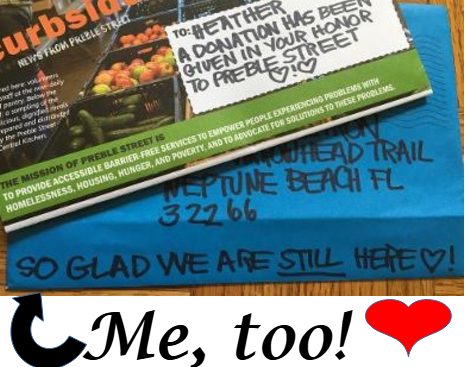
The word “carcinoma” may once again enter my life even though it appears I am “in the clear” – for now. I am aware of life’s fragility in a way I wasn’t before that memorable, “carcinoma” day. I control what I can by striving to take care of myself - my one, precious body and encourage others to do the same. Each morning I wake up excited, eager for what the day will bring. Every day is a “good” day when I simply reflect on the fact that I am still here.

* Sheehan, A. (2013). The essential Sheehan: a life time of running wisdom from the legendary Dr. George Sheehan. Rodale Books.

Thursday, July 15, 2021

That's Not Fair!

 
“That’s not fair!” 
“Yes, it is she broke the rules!”
We have been hearing those phrases a lot lately in the wake of the suspension and banning of several Olympic athletes. In fact, there is a list 15 pages long of banned athletes. Are all the suspensions and bans fair?
thesource.com

Sha’Carri Richardson won’t participate in the Olympics in the 100-meter race or the 4×100 relay. She was suspended for testing positive for a chemical found in marijuana. She smoked some marijuana after hearing of the death of her biological mother.

“Rules are rules,” and it appears Sha’Carri understands that. To her credit she did not give an excuse (blame someone or something else) for her bad choice but she did give a reason (explained her choice).

“I want to take responsibility for my actions. I know what I did. I know what I'm supposed to do. I know what I'm allowed not to do, and I still made that decision.” - Sha’Carri Richardson 1

Marijuana does not enhance athletic performance. 2 So why the prohibition? Who is being “cheated” in this situation? 
 
 
Then there’s Caster Semenya, who was banned from running 400 - 1500 meter events in the 2021 Olympics because she did not meet hormone requirements. Caster is an intersex cisgender woman - her birth certificate says “female,” she was raised as a girl, but she has an XY chromosome. To compete again in her 2012 and 2016 Gold Medal event, the 800 meter, she was told that she would have to take testosterone suppressants, which she refused to do. 3
 
Obviously genetics and physical characteristics play a role in athletic ability. Olympic Gold Medalist swimmer Michael Phelps has a lung capacity that is twice that of a normal man. 4 Clearly, this gives him a competitive advantage, but is it unfair? Was he required to remove one of his lungs to “level the playing field” for the other swimmers? Where do we draw the line?
runnersworld.com

“God made me the way I am, and I accept myself. I am who I am, and I'm proud of myself.” - Caster Semenya 5

In Caster’s case, she was penalized for something she had no control over, how she was born. She did not create her own body. Yet, she accepts her body, embraces it by being physically fit and active, and she addresses her situation in a way that honors her moral values - by declining to chemically alter her body. Is it fair to penalize her for how she was born or her choice NOT to ingest chemicals?

“But,” you might ask, "Isn’t it unfair to the other runners since Caster has a naturally higher level of testosterone?” Here is what Ajee Wilson, USA’s best 800 meter runner, has to say about Caster and “fairness.”

Throughout her career she ran in the shadow of Caster. Caster always won and Ajee consistently came in second. Once, after coming in second, again, Ajee was asked by a reporter, “Do you think it is good for the sport if Caster is allowed to run?’

“Absolutely, I think she should be allowed to run,” answered Ajee

Another reporter asked a slightly different variation of the same question, to which Ajee, losing patience, replied, “I think everyone should be allowed to participate. I definitely think Caster should be allowed to to do what she loves.”

Then came, what I think is the most important question, “Do you think having her in the race helped push you?”

Ajee smiled and replied, “Absolutely!”

“BINGO! The competitor in Ajee wanted Castor in the big races because the ultrarealist in Ajee cared more about getting the very most out of herself than about winning. And she was right to believe she was a better runner with Caster to vie against than without her.” 6
 

The reporters' questions and Ajee’s responses illustrate the two competing notions in sports that make the fairness debate so troublesome. First is the idea that the point of sports is the outcome — who wins and who loses. Winning is a fundamental part of sports competitions. Fans want to watch the best athletes perform. Sport competitions are BIG business. Everyone loves a winner and that’s why we have rules and everyone agrees to the same set of rules – in an attempt to create “fairness.”

The second notion is about “the journey” - everything leading up to the competition. Simply having the opportunity to train and compete creates “fairness.” Even recreational runners know that in order to better your performance you need to train no matter what genetics or physical characteristics you possess. The time, energy, and effort athletes must put in before a competition are worthy of our admiration. Putting worth your best effort is the most important aspect of sports, regardless of the outcome. 7

The tension exists, then, between whether we think sports are about the outcome ... or the journey - about winning ... or putting forth your best effort - about an individual achievement ... or a societal good. “Fairness” exists somewhere along this spectrum.

Finally, there was a time when "fairness" meant women could not run marathons, people with disabilities were excluded from sports, and professional sport teams were segregated. Now we are in a particular cultural moment which is redefining “fairness.” I have a feeling that rules will change and our concept of fairness will be reworked, once again. 
 

Saturday, June 19, 2021

An Offal Burrito!

 
latimes.com
On January 14, 2021, Shelby Houlihan, American record holder in the 1500 meters and 5,000 meters, was informed that she tested positive for a banned substance called nandrolone (19-norsteroid potent anabolic steroid). Anabolic steroid is a compound somewhat like testosterone, a hormone that can boost strength by helping muscles bulk up. At low levels, it’s natural in males and to a lesser degree in females, and is part of a family of compounds involved in the synthesis of testosterone, which occurs in the testes of men and in the ovaries of women. It is also found in pregnant women. 
 
Houlihan received a four-year ban from competition from the World Anti-Doping Agency (WADA) and on June 11, 2021 she lost her appeal in the Court of Arbitration for Sport (CAS). She has been tested approximately 100 times since 2016 and has never tested positive nor missed a test in that time.1
 
Houlihan was not pregnant. She believes the result came from a pork burrito purchased at a food truck near her home in Beaverton, Oregon, and ate the night before the 6 a.m. test. Obviously, many people reacted with skepticism, sarcasm and dismissed her claim. But what if she is correct? Is it true that a pork burrito can contain nandrolone?
Can pork burritos even contain nandrolone?
As crazy as it seems, yes, if the pork comes from an uncastrated hog. Nandrolone and related compounds do occur naturally in meat, especially offal of male animals, particularly uncastrated hogs (boars). And while boar meat is a small fraction of the overall pork supply (in the United States, nearly 100 percent of male pigs are castrated.2), “small” isn’t the same as “none.”
 
Offal is the entrails or internal organs of an animal used as meat. If you’ve ever eaten liver, you’ve eaten offal. Houlihan claims that she ordered a carne asada burrito (which should have been beef) but got something unusually greasy and not like normal carne asada. She believes she was accidentally served a pork burrito made from pork stomach meat at the food truck. Houlihan has the receipt and the iPhone tracking data to substantiate her purchase at the food truck. The proprietor of the food truck stated that they use pig stomach in two of their burritos.3

Did that one burrito contain enough nandrolone to cause her to fail the test? 

 According to the Handbook of Experimental Pharmacology, the steroid (nandrolone) has been used in breeding and is produced naturally in some animal species, including boars, but that "the likelihood of ingesting steroid-contaminated food must be considered slim."  However, there are studies that have demonstrated that "slim" doesn't mean impossible.

In one study, three male volunteers agreed to consume 310 g (11 ounces) of boar offal. We don’t know the weight of the burrito that Houlihan ate, but we can estimate. A standard Chipotle restaurant brand burrito weighs 17 ounces.4  So we can safely use 17 ounces as an estimate for her burrito.

The three men delivered urine samples before, during and 24 hours after eating the offal. Ten hours after eating, nandrolone concentrations in urine reached 3.1 to 7.5 microg/L – enough to trigger a positve nandrolone test result. The researchers concluded: “eating tissues of non-castrated male pork might induce some false accusations of the abuse of nandrolone in antidoping.” 5

Additionally, another study found that it was possible that unknowingly ingesting boar offal can produce positive test results. The researcher concluded: “Although highly improbable, athletes should prudently avoid meals composed of pig offal in the hours preceding the test since the consumption of edible parts of a non-castrated pig has been shown to results in the excretion of 19-norandrosterone (nandrolone) in the following hours.”6

Finally, in order to differentiate between synthetic (drug) and natural (boar offal) nandrolone a lab must test specifically for the difference. The use of isotope ratio mass spectrometry is the only way to distinguish and prove the origin of nandrolone.7   Houlihan’s urine sample was measured at the parts per billion level which established the presence of nandrolone but not its type nor its origin. 
 
outsideonline.com

Houlihan’s Response:

“… the lab never accounted for this possibility (ingesting pork offal). They could have reported this as an atypical finding and followed up with further testing.”

Houlihan also passed a polygraph and had a hair sample analyzed by toxicologists.

“WADA agreed that test (hair sample) proved that there was no build up of this substance in my body, which there would have been if I were taking it regularly. Nothing moved the lab from their initial snap decision... I also believe it was dismissed without proper due process.” 8

The Judgment:

A three-judge panel from the Court of Arbitration for Sport ruled against her. All they said, in a brief May 15 press release was, “The CAS Panel unanimously determined that Shelby Houlihan had failed, on the balance of probability, to establish the source of the prohibited substance.”

Anti-doping organizations and the Court of Arbitration for Sport have generally declined to entertain arguments about contaminated meat unless the athlete can provide a sample of the meat for testing.

On January 29, 2021, Sports Resolutions (an arbitrator) ruled against Kenyan long-distance runner James Kibet. Kibet claimed that he tested positive for nandrolone after ingesting pork fat. He informed anti-doping regulators that the meat in question came from a shop called "Glorious Pork Joint." Kibet provided additional evidence to support his claim, but the arbitrator said he did not provide a sample of pork fat from that location to be analyzed and therefore "failed to prove that the pork fat he allegedly consumed contained nandrolone."9

Houlihan plans to appeal the decision to the Swiss Federal Tribunal, but that process would take months and require hiring a Swiss lawyer.

My 2 Cents

If the US food supply is tainted with nandrolone, then WADA and the AIU need to change the level needed to trigger a positive test or mandate that athletes not eat certain foods.

Or tell athletes that if they do eat those foods and test positive, they are out of luck unless they provide a meat sample.

But in the meantime, they should re-verify the initial screening results with an isotope ratio mass spectrometry test to determine the type and origin of nandrolone, especially if the athlete has a long history of negative results on doping tests.

Finally, athletes should NOT eat pork, especially from food trucks!

[NOTE: I am a vegetarian and, all the research – especially on boar offal, - makes me very happy I am!]

clipartlibrary.com
 

Sources:

Tuesday, June 15, 2021

“You only live once …

Last Sunday I passed one of my “bridge peeps” – the people who run, walk, or cycle the Beach Blvd. Bridge – she was walking towards me so we greeted one another. On my second lap, we again passed one another. I was ready to give my usual “second-pass” greeting, (“Have a great day!”) when she said, “You are my inspiration!” 

I responded, “And you are mine!”

She laughed and said, “We must be doing something right.”

Comedian Fred Allen once said, “You only live once but if you do it right, once is enough.”  I don’t know all their names but I been fortunate to come across many runners who “do it right.” Their impact has nothing to do with their great speed or phenomenal distances covered. Their impact has everything to do with their apparently trivial actions, words, or, even simply, their presence. They clearly demonstrate the value of this “one life.”

My brief intersection in with the lives of these few runners (and one spectator) added value to my life. I am so thankful our paths crossed.

Photo credit: c-ville.com 
“Running Man” – Who was this guy running shirtless, ½ naked, rain or shine, in snow and wind? I saw the “Running Man” at numerous races in Virginia and the D.C. area. And, while his lack of attire captured everyone’s attention, there was something else about him that was even more noteworthy – his smile. His smile spread from ear to ear. Running Man simply exuded joy, he obviously loved running – it showed and it was contagious! Just looking at him was a joyful experience, you simply had to smile.

Unfortunately I learned Running Man’s real name after he was hit by an SUV while running and died. His name was Philip Weber III and he died December 29, 2015. I also learned that when he wasn’t running, Philip was an enthusiastic reader and he had a passion for learning. A memorial 8K was run in his honor to benefit the Jefferson-Madison (Virginia) Regional Library ensuring the library can continue being the inspiration to others that it was to Philip, the Running Man.


Joy is a circle. When you do things from your soul, others are inspired let their joy flow, and once the joy begins to flow, even death can’t stop it.


“Teen Spirit”- In was raining in Johnson City, Illinois during an out-and-back road race. Cones separated the runners from the automobile traffic in adjacent lanes. I was running in a pack which included a teenage girl.
We were only a ½ mile into the race when a car slowed, and then crept along next to us, a window rolled down, and a woman called out.” Honey, get in the car!”
We kept running, looking at the car, slack-jawed in disbelief. Then the teenage girl yelled, “No!”
The man driving, (her father?) leaned across the woman and said yelled, “Get in the car NOW!”
“I’m running,” the teenager replied.
“But, honey,’ the woman pleaded, “it’s raining!”

The teen pumped her arms and surged ahead, “I’m running in the rain!”
The car pulled away. Teen spirit won.

Spirit matters, there will always be someone or some circumstance that could extinguish your dreams, your goals. Let your spirit run …even in the rain!


“Kick-Ass Couple”- There are no great metropolitan areas in Southern Illinois so all the races I ran while living there were between 50-maybe 200 runners tops, and you noticed everyone. There was this couple, a husband and wife, who stood out because they seemed to run every race. They were back-of-the-packers, and each time they chugged across the finish line together, they high-fived one another, grabbed a banana and some water, and then, after exchanging a few words with one or two people they left.

This happened for years until, finally, as they crossed the finish line, a race director announced their names and asked them to come forward for an award. I was as surprised as they were. The director said, “Now I know you don’t like public recognition but this will be short and sweet. This couple has run a 5K together every weekend for the past 5 years. (Applause) But that isn’t as amazing as the fact that they did while each was battling cancer. (Gasps) Therefore, on behalf of your running brothers and sisters, I present you with this Kick-Ass award!” (Cheers!!) 

Quiet determination is a strength. You don’t have to be loud, big, or bold to be Kick-Ass. 


“Little Cheerleader” – In 2019 I crossed the Acosta Bridge in Jacksonville, Florida, turned the corner and headed for the finish line. People lined the course yelling encouragement, “You’ve got this!” “You’re almost there!” “You rock!” “You get the beer!” For decades I have heard basically the same encouraging words over and over again. Until this race.

I saw a little girl jumping up and down along the sideline, waving her arms. She looked right at me and yelled the words I know were meant just for me, in that moment, “Run, lady, run!”

Encouragement is hearing a few choice words at just the right moment -- priceless!

"Make this one life you have a work of art. 
Live with class and you'll go out in style." 
- Dr. George Sheehan

*See also, Zip Rzeppa